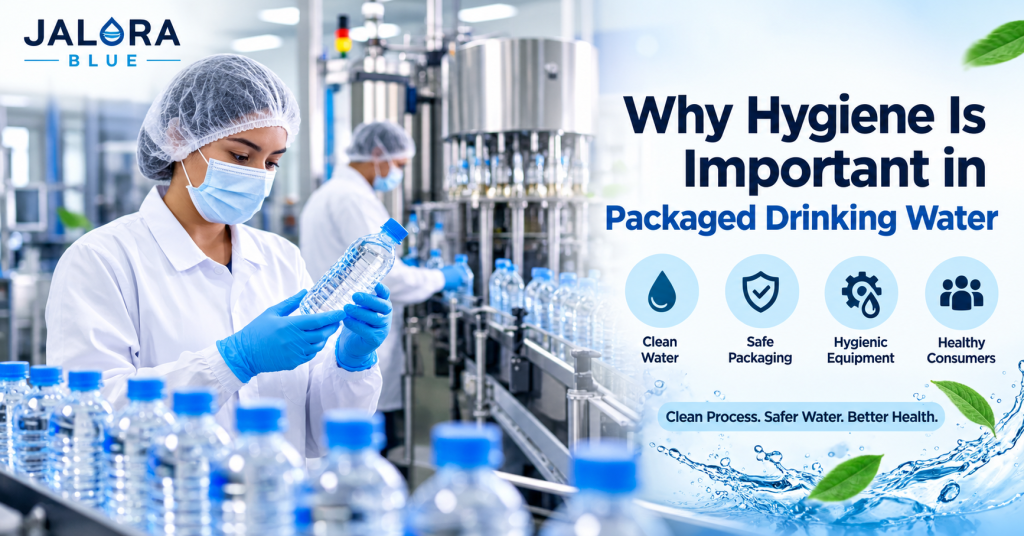
Clean and safe drinking water is essential for everyday life. Whether it is consumed at home, in offices, restaurants, hotels, schools, hospitals, or public events, people expect packaged drinking water to be safe, clean, and properly handled. This is why hygiene in packaged drinking water is one of the most important factors for any bottled water business.
A packaged drinking water company is responsible not only for treating water but also for maintaining hygienic conditions throughout the entire production, packaging, storage, and distribution process. Even high-quality water can become contaminated if proper hygiene practices are not followed.
For a bottled water brand such as JALORA BLUE, maintaining hygiene helps protect product quality, build customer confidence, and establish a strong reputation in the market.
What Is Hygiene in Packaged Drinking Water?
Hygiene in packaged drinking water refers to the practices used to keep water, equipment, bottles, packaging areas, storage facilities, workers, and transportation systems clean and sanitary.
Hygiene should be maintained at every stage of the process, including:
- Water collection and treatment
- Filtration and purification
- Storage
- Bottle preparation
- Bottle filling
- Capping and sealing
- Labeling and packaging
- Finished-product storage
- Transportation and distribution
A single weak point in this process can affect the overall quality of the finished product. Therefore, hygiene should be treated as a continuous process rather than a one-time activity.
1. Hygiene Helps Protect Water Quality
The primary purpose of packaged drinking water is to provide consumers with safe and suitable drinking water. Proper hygiene helps reduce the possibility of contamination during processing and packaging.
Water may go through several purification and treatment stages before being bottled. However, if poorly maintained equipment, unclean surfaces, contaminated containers, or improper handling are involved afterward, the quality of the finished product can be affected.
Maintaining clean equipment and controlled production areas helps ensure that the treated water remains protected until it reaches the consumer.
2. Clean Bottles and Packaging Are Essential
Water quality is not the only concern. The bottle and its components also need to be handled hygienically.
Bottles, caps, and other packaging materials can come into contact with the product. Therefore, they should be stored and handled in a way that protects them from dust, dirt, moisture, and other potential sources of contamination.
The filling and capping area should also be maintained in a clean and controlled condition. Proper packaging helps protect the product after it leaves the treatment system.
For a bottled water brand, attractive packaging is important for marketing, but clean and hygienic packaging is even more important for consumer confidence.
3. Hygiene Builds Customer Trust
Consumers cannot usually see the complete manufacturing process behind a bottle of drinking water. They depend on the brand’s reputation, packaging, labeling, and overall presentation when deciding whether to trust a product.
A clean production environment, properly sealed bottle, professional packaging, and consistent product quality can help create a positive impression.
When customers repeatedly receive a product that meets their expectations, they are more likely to purchase the same brand again.
For JALORA BLUE, maintaining high hygiene standards can therefore become an important part of building long-term customer relationships.
4. Employee Hygiene Matters
People working inside a packaged drinking water facility can also influence product hygiene.
Employees should follow appropriate personal hygiene practices while working in production and packaging areas. Depending on the facility’s procedures, this may include:
- Wearing clean protective clothing
- Maintaining clean hands
- Using appropriate hair and beard coverings where required
- Following workplace sanitation procedures
- Avoiding unnecessary contact with product-contact surfaces
- Following established entry and exit procedures for controlled areas
Regular employee training is also important. Workers should understand why hygiene matters and how their daily actions can affect product quality.
Good hygiene is not simply the responsibility of the quality-control team. It should be part of the culture of the entire organization.
5. Clean Equipment Supports Consistent Production
Water treatment and bottling facilities use various types of equipment, pipes, tanks, filters, filling machines, and other components.
If equipment is not properly maintained and cleaned according to established procedures, unwanted buildup or contamination can affect production.
Regular cleaning, sanitation, inspection, and preventive maintenance help keep equipment in suitable operating condition.
A well-maintained facility also makes it easier to identify potential problems before they become larger quality issues.
6. Hygienic Storage Is Important
The hygiene process does not end after bottles are filled and sealed.
Finished bottles should be stored appropriately before transportation. Storage areas should be clean, organized, and protected from conditions that could damage packaging or compromise product integrity.
Bottles should also be handled carefully during loading, unloading, and transportation. Damaged packaging can create quality concerns and negatively affect the customer’s perception of the brand.
Proper inventory management can also help businesses maintain product freshness and reduce unnecessary storage periods.
7. Hygiene Protects Brand Reputation
In the packaged drinking water industry, reputation is extremely valuable.
Customers may have many brands to choose from, so a company needs to consistently demonstrate reliability. A hygiene-related quality issue can negatively affect customer confidence and potentially harm a brand’s reputation.
On the other hand, consistent quality and professional operations can help a business establish a dependable image.
For a growing brand like JALORA BLUE, hygiene should therefore be considered part of the brand identity—not just a production requirement.
8. Regular Quality Checks Are Important
Hygiene should be supported by an appropriate quality-control system.
Depending on the applicable requirements and the facility’s quality procedures, businesses may monitor areas such as:
- Raw water quality
- Treated water quality
- Cleaning and sanitation procedures
- Equipment condition
- Packaging materials
- Production areas
- Finished products
- Storage and transportation conditions
Keeping appropriate records can also help businesses track their processes and identify recurring problems.
Regular testing and monitoring should be carried out according to applicable regulations, standards, and professional quality-control practices.
9. Hygiene Can Improve Customer Satisfaction
When customers purchase packaged drinking water, they expect consistency. They want the bottle to arrive clean, properly sealed, and in good condition.
Restaurants, hotels, offices, retailers, event organizers, and other commercial customers may be particularly attentive to product presentation and reliability because the water they purchase can become part of their own customer experience.
Consistent hygiene and quality can therefore contribute to customer satisfaction and repeat business.
10. Hygiene Should Be a Continuous Commitment
One of the biggest mistakes a water business can make is treating hygiene as a one-time task.
A clean facility today does not automatically guarantee a clean facility tomorrow. Equipment, production areas, packaging materials, storage spaces, and employee practices all require ongoing attention.
Businesses should establish clear cleaning schedules, employee procedures, quality checks, maintenance programs, and monitoring systems appropriate to their operations.
Continuous improvement is essential because maintaining quality is an ongoing responsibility.
Conclusion
Hygiene plays a vital role in the packaged drinking water industry. From water treatment and equipment maintenance to bottle handling, employee practices, storage, and transportation, every stage can influence the quality of the final product.
For consumers, hygienic packaged drinking water provides confidence that the product has been handled responsibly. For businesses, strong hygiene practices can support product consistency, customer satisfaction, brand reputation, and long-term growth.
At JALORA BLUE, we believe that quality and customer trust go hand in hand. A successful packaged drinking water brand is not built only through attractive bottles or effective marketing—it is built through consistent attention to quality, hygiene, safety, and responsible handling.
If you are starting or growing a packaged drinking water business, make hygiene a fundamental part of your operations from day one. It can help you create a stronger foundation for a trusted and sustainable water brand.