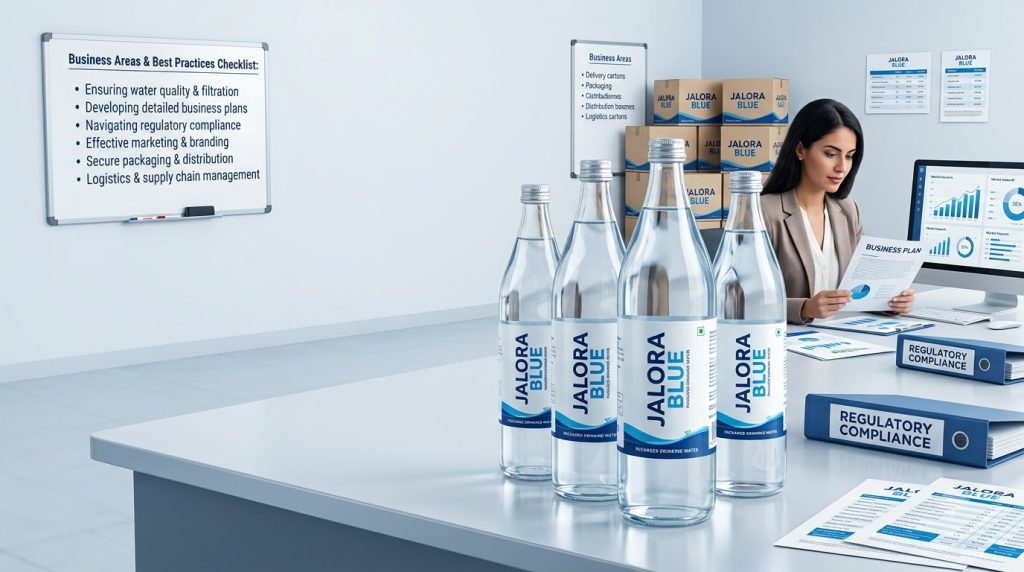
The bottled water industry has become an attractive business opportunity as demand for safe, hygienic, and conveniently packaged drinking water continues to grow. From restaurants and hotels to offices, shops, events, schools, and households, packaged drinking water is used in many different situations. However, starting a bottled water business requires more than simply purchasing a water purification system and filling bottles.
A successful bottled water business depends on water quality, regulatory compliance, packaging, branding, distribution, pricing, and customer trust. New entrepreneurs can make avoidable mistakes when they enter the industry without proper planning. Understanding these mistakes in advance can help you build a more organized and sustainable business.
In this article, we will discuss the common mistakes to avoid when starting a bottled water business and how proper planning can help you create a reliable packaged drinking water brand.
1. Starting Without Proper Market Research
One of the biggest mistakes entrepreneurs make is starting a bottled water business without understanding their local market.
Before investing in a plant, study the demand in your target area. Identify potential customers such as restaurants, hotels, offices, retailers, event organizers, caterers, schools, hospitals, and wedding venues. Also research existing bottled water brands, their bottle sizes, pricing, distribution networks, and customer preferences.
Market research can help you answer important questions:
- Who are your target customers?
- Which bottle sizes are in demand?
- What prices are customers willing to pay?
- Who are your major competitors?
- Which areas have strong demand?
- How will you distribute your products?
A clear understanding of the market can help you make better decisions about production capacity, packaging, pricing, and marketing.
2. Ignoring Licenses, Certifications, and Regulations
The bottled water industry is closely connected with food safety and quality standards. One serious mistake is beginning commercial production without understanding the licenses, registrations, approvals, testing requirements, and applicable regulations.
Depending on your business model and location, you may need to comply with requirements related to food safety, packaged drinking water standards, water testing, labeling, local permissions, environmental requirements, and other applicable regulations.
Do not assume that compliance can be handled later. Research the current requirements applicable to your plant and product before starting commercial production. Taking professional regulatory advice can also help reduce the risk of costly mistakes.
3. Choosing a Location Without Proper Planning
The location of your water plant can have a major impact on operating costs and distribution efficiency.
Some entrepreneurs select a location simply because the property is inexpensive. However, a low-cost location may create problems related to transportation, electricity, water availability, storage, workforce, or access to customers.
Before finalizing a location, consider:
- Availability and suitability of the water source
- Electricity and utility requirements
- Transportation access
- Distance from major customers
- Storage space
- Production and expansion requirements
- Applicable local permissions and regulations
A strategically selected location can make daily operations and distribution much easier.
4. Compromising on Water Quality
Water quality should never be treated as an area where costs can be cut.
Customers purchase packaged drinking water because they expect it to be safe, clean, hygienic, and consistently produced. Poor-quality water can damage customer trust and potentially create serious business and compliance problems.
Your production process should include appropriate treatment, filtration, disinfection, quality monitoring, and testing according to applicable standards.
Regular testing and proper documentation can help you monitor consistency. Remember that a bottled water brand is ultimately selling trust and safety, not just a bottle of water.
5. Buying Cheap or Poor-Quality Packaging
Another common mistake is focusing only on the lowest packaging cost.
Bottles, caps, labels, cartons, and other packaging materials affect the appearance, durability, hygiene, and overall customer perception of your product. Poor-quality packaging can result in leakage, damaged bottles, unattractive presentation, or customer complaints.
Instead of choosing suppliers based solely on price, compare quality, consistency, delivery reliability, and total cost. Buying packaging materials in suitable quantities can also help control expenses without unnecessarily compromising quality.
6. Underestimating Branding and Label Design
Many new bottled water businesses focus heavily on production but give very little attention to branding.
Your bottle is also a marketing tool. Customers should be able to recognize your brand easily on a restaurant table, retail shelf, office, or event venue.
A professional brand identity should be consistent across:
- Bottle labels
- Logo
- Packaging
- Website
- Social media
- Promotional materials
- Delivery vehicles
For example, JALORA BLUE can build a recognizable identity by maintaining consistent branding across its packaged drinking water products and digital marketing channels.
However, branding should always work together with genuine product quality. Attractive packaging may encourage a first purchase, but consistent quality and service help build long-term customer relationships.
7. Setting Prices Without Calculating Total Costs
Setting a selling price by simply looking at competitors can create problems.
Your actual cost includes much more than the water itself. Consider expenses such as bottles or preforms, caps, labels, cartons, treatment and filtration, electricity, labor, transportation, maintenance, testing, marketing, rent, taxes, wastage, and administrative expenses.
Calculate your cost per bottle or case before deciding your selling price.
You should also consider different pricing structures for retailers, distributors, restaurants, offices, events, and bulk customers. A clear pricing strategy can help you maintain healthier margins while remaining competitive.
8. Ignoring Distribution and Delivery
Producing good-quality bottled water is only one part of the business. You also need an efficient way to get your products to customers.
A common mistake is investing heavily in production while ignoring delivery planning.
Develop a distribution system based on your target market. Maintain suitable inventory levels and plan delivery routes efficiently. Reliable delivery is especially important for businesses that regularly order drinking water.
Restaurants, offices, retailers, caterers, and event organizers may prefer suppliers who can provide consistent quantities on time.
9. Depending on Only One Type of Customer
Another mistake is depending too heavily on one customer category.
For example, if your entire business depends on a few retail shops, losing one major customer could significantly affect sales.
Instead, consider building multiple customer segments, including:
- Retail stores
- Restaurants and cafés
- Hotels
- Offices
- Schools and institutions
- Caterers
- Event organizers
- Wedding venues
- Corporate events
- Local distributors
A diversified customer base can provide more stability and create opportunities for future growth.
10. Neglecting Digital Marketing
Even a local bottled water business can benefit from a strong online presence.
Customers and businesses increasingly search online before contacting suppliers. A professional website, Google Business Profile, social media pages, and useful content can improve your visibility.
You can create content around topics such as water quality, hygiene, packaged drinking water, bottle sizes, business supply, delivery services, and frequently asked customer questions.
Social media platforms such as Instagram, Facebook, YouTube, and WhatsApp can also be used to showcase your products, packaging, delivery network, customer service, and business offers.
11. Focusing Only on Sales Instead of Customer Relationships
Getting a customer is important, but retaining that customer can be equally valuable.
Some new businesses focus entirely on acquiring new buyers and overlook existing customers. Regular customers can provide repeat orders and valuable word-of-mouth recommendations.
Maintain professional communication, respond quickly to complaints, deliver orders on time, and maintain consistent product quality.
Simple practices such as following up with business customers and collecting feedback can help you identify problems before they become bigger issues.
12. Expanding Too Quickly
Rapid expansion can be tempting when initial sales are strong. However, expanding production, distribution, or product varieties too quickly can put pressure on cash flow and operations.
Start with a manageable business model. Monitor sales, expenses, customer retention, production efficiency, and distribution performance.
Once your operations become stable, you can evaluate opportunities to expand into new locations, bottle sizes, customer segments, or distribution channels.
Conclusion
Starting a bottled water business can offer significant opportunities, but success requires careful planning and consistent execution. Entrepreneurs should avoid common mistakes such as skipping market research, ignoring regulatory requirements, compromising on water quality, choosing poor packaging, underestimating distribution costs, and neglecting customer relationships.
A strong bottled water business should focus on quality, hygiene, compliance, branding, reliable delivery, competitive pricing, and customer trust. These elements work together to create a sustainable business rather than relying only on short-term sales.
If you are planning to enter the packaged drinking water industry, take time to understand your market, build reliable production processes, develop professional branding, and create a dependable distribution network.
With the right strategy and attention to quality, a bottled water brand can gradually build recognition, customer loyalty, and long-term business opportunities.